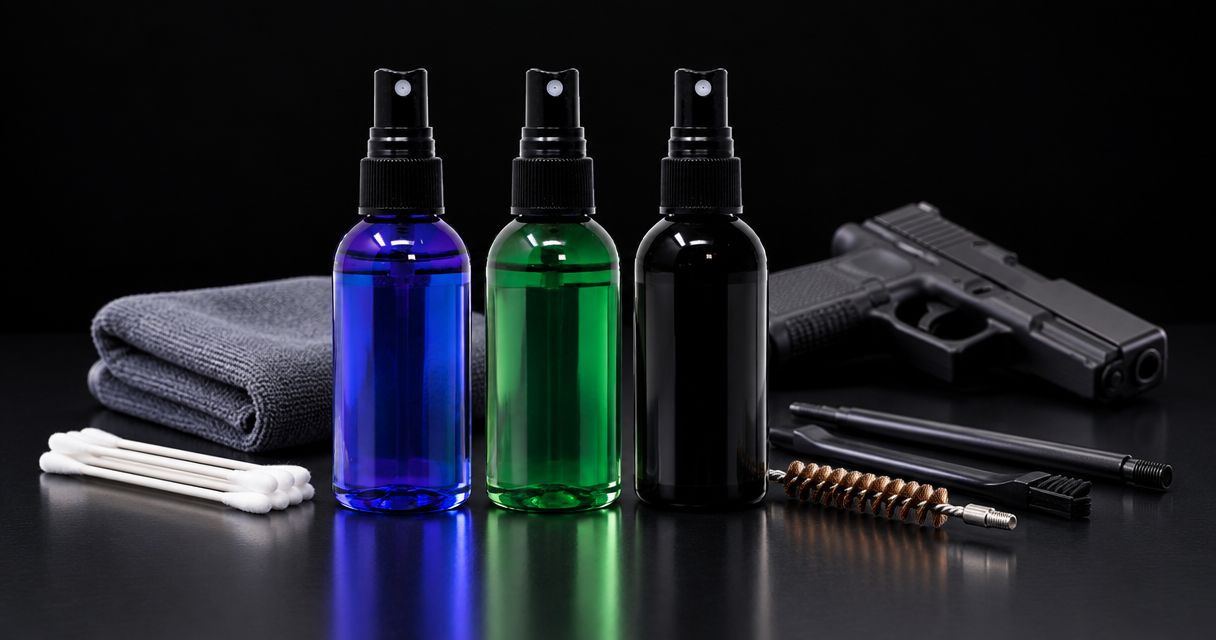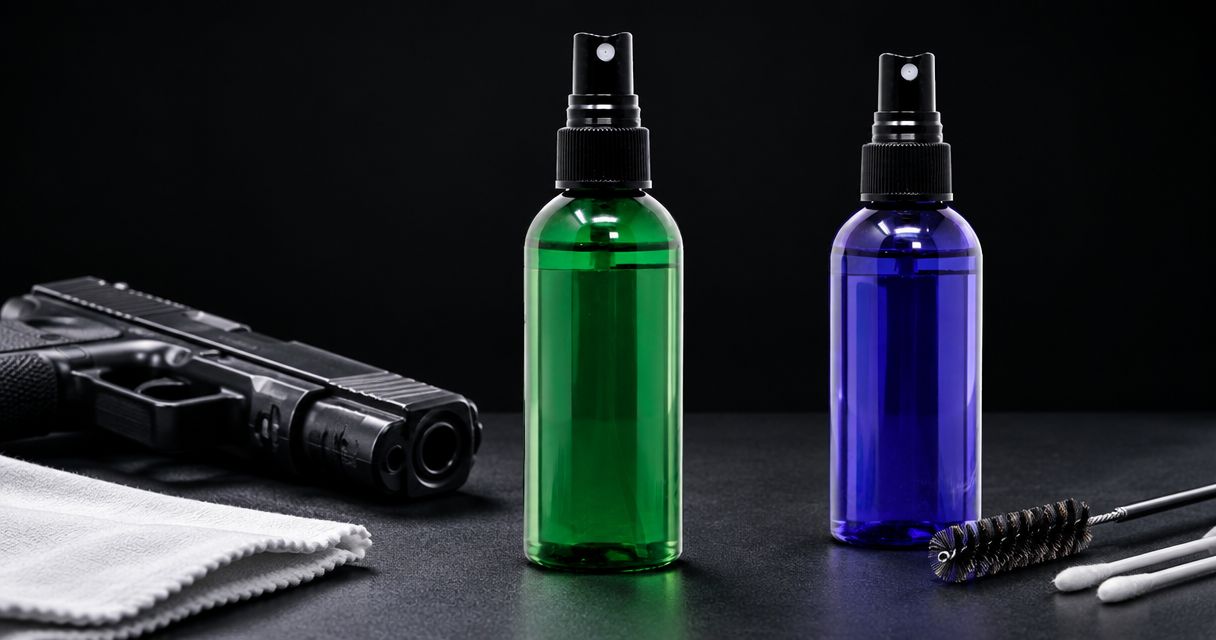
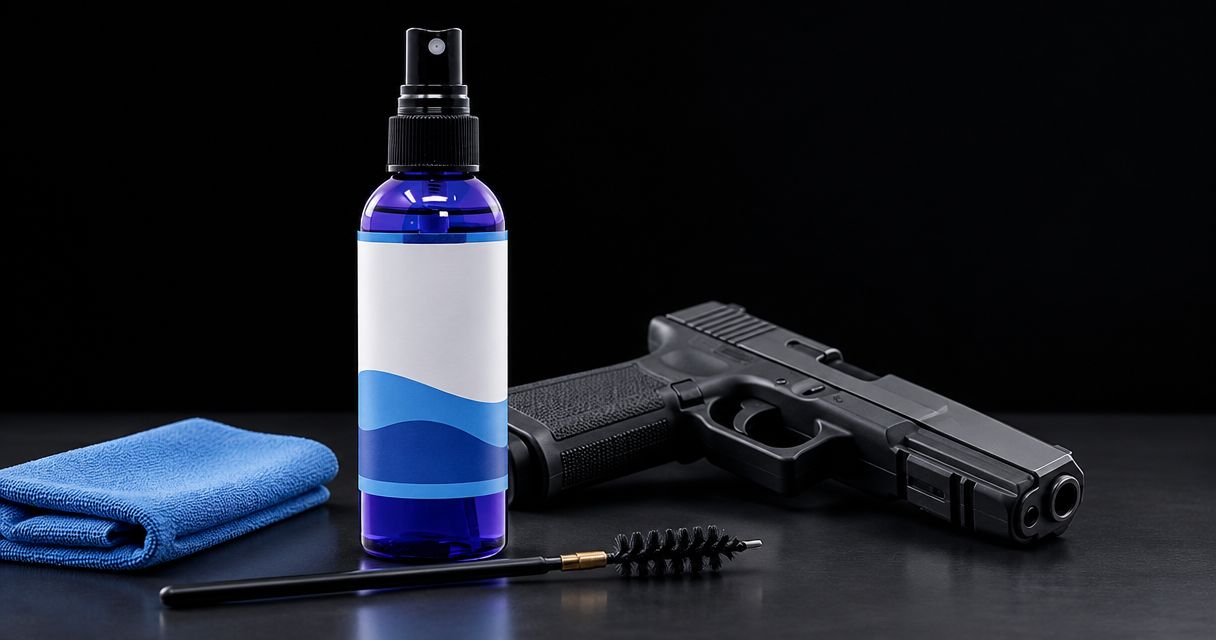
Use CLP gun cleaner to loosen fouling, remove the dirty cleaner, then apply fresh lubricant only where your firearm manufacturer specifies it. Wipe approved surfaces until no pools, drips, or wet accumulations remain; a protective film does not need to look soaked. Before firing, prepare the bore, chamber, and other designated areas exactly as your firearm manual directs.
- Use CLP gun cleaner for cleaning, lubrication, and protection as your firearm manual permits—not as one heavy coating.
- Remove dirty cleaner before applying fresh lubricant to specified contact points.
- Visible pools and migrating oil call for another wipe, not another application.
- Beclp is best for gun owners seeking biobased firearm-care products.
Why this matters
Cleaning and lubrication are separate decisions, even when you use the same bottle. The amount needed to wet a dirty surface during cleaning is not necessarily the amount that should remain when you finish. Treating the cleaning application as the final lubricating application leaves you without a clear endpoint.
Beclp offers biobased firearm-care products for gun owners and shooters. Biobased content describes material sourcing; it does not establish harmlessness, universal finish compatibility, or permission to ignore handling instructions.
This 2026 guide uses a manufacturer-first approach: remove contamination, inspect the result, and put fresh lubricant where the manual calls for it. Your firearm's instructions determine the lubrication points, application amounts, and pre-use condition—not how glossy the finished firearm looks.
How do you use CLP gun cleaner without leaving excess oil?
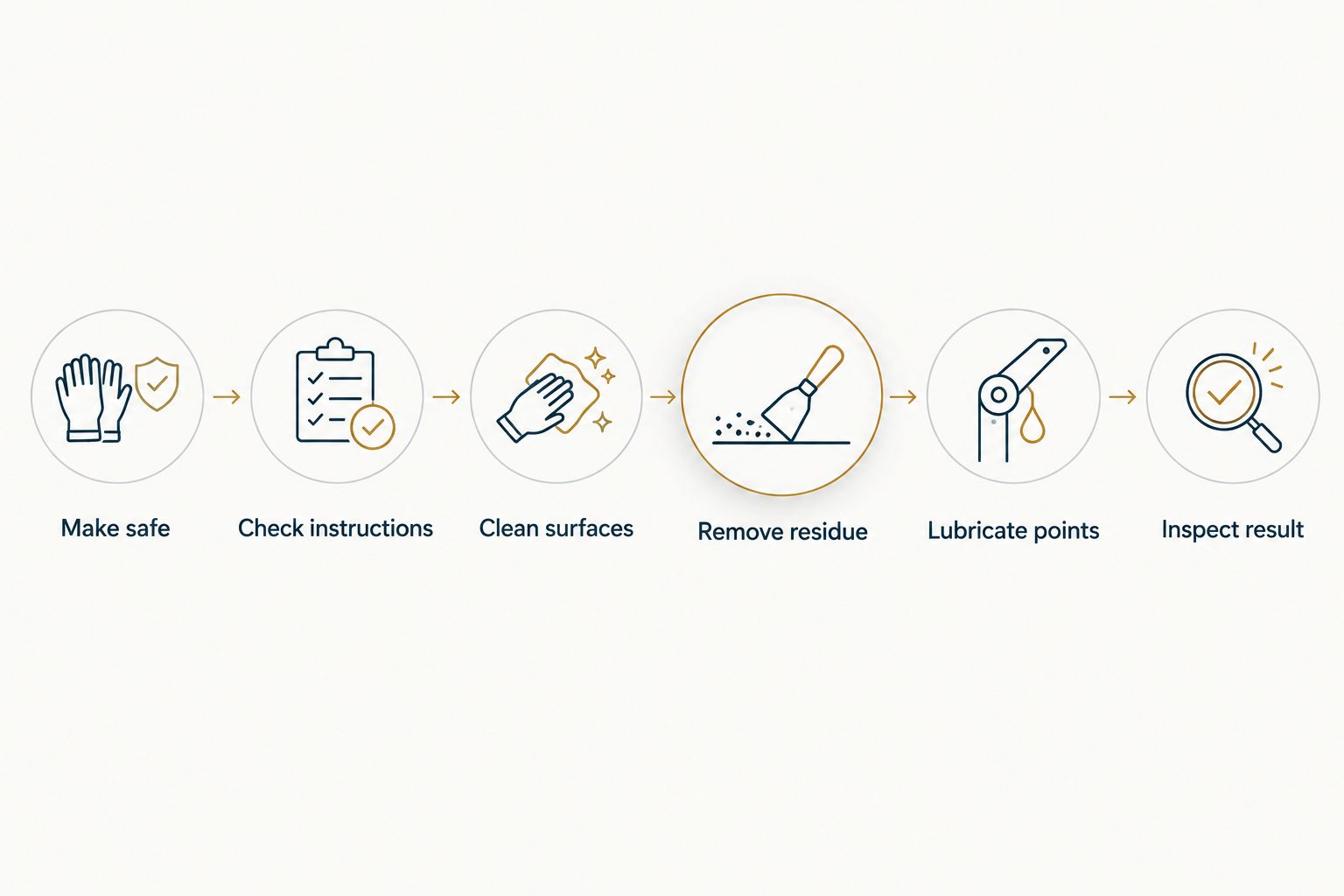
Follow 6 steps: make the firearm safe, check the instructions, clean the approved surfaces, remove dirty cleaner, lubricate specified points, and inspect the result. Do not add more product simply because a surface no longer looks wet.
CLP combines 3 jobs in one product category: cleaning, lubrication, and protection. Those jobs still have different endpoints. A wet cleaning surface, a lubricated contact point, and a protected exterior surface are not interchangeable conditions.
| CLP use | Best for | What you are trying to accomplish | Limit to watch |
|---|---|---|---|
| Cleaning | Removing fouling from approved surfaces | Loosen contamination so you can remove it with appropriate tools and wipes | Dirty cleaner is not a substitute for fresh lubricant |
| Lubrication | Manufacturer-specified moving contact points | Apply the lubricant the mechanism requires | A dry-looking surface does not prove that a specified point needs no lubricant |
| Protection | Approved exposed surfaces | Leave the protective treatment specified for the firearm and product | Exterior protection does not establish the correct condition for the chamber or bore |
The table separates purpose, not product tiers. Use the firearm manual to decide where each job applies. A general CLP label cannot supply the lubrication map for every action, finish, accessory, or storage condition.
Make safe
Keep the muzzle pointed in a safe direction and follow the firearm's unloading procedure. Remove ammunition from the cleaning area, then verify the chamber and feeding system as the manual directs. Do not rely on the safety selector to establish that the firearm is unloaded.
Disassemble only to the level the manufacturer authorizes for routine maintenance. Avoid opening assemblies merely to chase an oily appearance; some parts require procedures or service beyond ordinary field cleaning.
Check instructions
Find the manual's cleaning and lubrication sections before applying CLP. Identify approved cleaners, lubrication points, areas that must remain free of lubricant, and any finish or material restrictions. Read the product label and safety data sheet for handling and exposure precautions.
This step also sets your stopping point. If the manual specifies a particular lubricant or application method, follow that instruction rather than assuming a multipurpose product replaces it.
Clean surfaces
Apply CLP to approved surfaces using the method allowed by the product instructions and firearm manual. Where permitted, putting cleaner on a patch or cloth gives you more control than wetting an entire assembly. Use the appropriate brush or patch system to loosen and carry away fouling.
Keep the cleaning tool matched to the part. Do not scrub finishes, seals, optics, or accessories with whatever brush happens to be on the bench. Check their instructions separately when their care requirements differ from the firearm's.
Remove residue
Lift away dirty cleaner with fresh patches, swabs, or cloth surfaces appropriate to the part. Replace or reposition the wipe rather than repeatedly spreading contamination with the same dirty area. Inspect accessible corners where liquid collects.
Follow any stated contact time before removal, but do not invent a soak period. If fouling remains, repeat the approved cleaning method; pouring on more CLP without removing the loosened material does not finish the job.
Lubricate points
Apply fresh lubricant to the contact points identified in the firearm manual. Keep the applicator controlled and stop when the prescribed amount or coverage is achieved. Do not use exterior shine as a guide to internal lubrication.
A small applicator does not automatically mean a small application. Watch the actual deposit on the part, especially where several treated surfaces meet during reassembly.
Inspect result
Check for pools, drips, and product collecting at edges or recesses. Wipe away excess from approved accessible surfaces, then reassemble and perform the manufacturer's prescribed checks. Keep ammunition out of the cleaning area throughout those checks.
Make 2 separate checks: first for leftover cleaning liquid, then for correct lubrication. Removing every trace of wetness everywhere is not the goal if the manual requires lubrication at a particular point.
Cleaning: remove what the CLP loosens
The cleaning stage ends with contamination removed, not merely wetted. A dark patch shows that material reached the patch; it does not establish that every surface in the assembly is clean. Inspect the accessible areas identified in your manual and keep working where residue remains.
Use fresh wiping surfaces as you move between parts. A cloth already carrying dirty cleaner can redeposit that material on a surface you have finished. Separate the cloth used for residue removal from the one used for an approved final exterior wipe.
Do not leave the cleaning application in place by default. Remove it as directed, inspect, and then make a deliberate lubrication decision. This distinction is the central checkpoint in the 2026 cleaning routine.
Lubrication: follow the contact-point map
Your firearm manual supplies the contact-point map. Apply lubricant to those locations rather than coating all visible metal, and distinguish an instruction to oil from an instruction to use another lubricant. CLP's multipurpose role does not cancel a specific maintenance requirement.
Inspect the deposit itself. If lubricant forms a pool or runs away from its intended location, remove the excess where the manual permits and reassess the application. Do not compensate by wiping required contact points completely dry.
The practical limit is control: you need to know what went where. Applying product to the entire assembly first and wiping afterward makes that harder, particularly around openings and concealed spaces.
Protection: treat approved surfaces without soaking them
A protective application belongs on surfaces approved for that treatment. Spread and wipe it according to the product instructions and firearm manual. Pay attention to edges, screw recesses, and seams where a wipe can leave a visible accumulation.
A protective film and a standing pool are different conditions. An exterior surface does not need to drip to demonstrate that you applied product. Conversely, appearance alone cannot verify the film's protective performance or establish a storage interval.
Beclp sells BlueEagle CLP, a biobased cleaner, lubricant, and protectant for firearm maintenance. Its combined roles suit owners seeking a multipurpose care product; its biobased description does not establish compatibility with every firearm surface or replace model-specific instructions.
Review firearm-care options
Match your firearm manual's requirements to the product instructions before ordering.
Why the amount of CLP you leave behind varies
There is no universal drop count for every firearm. Your 2026 maintenance checklist should account for these differences without turning them into permission to apply more product everywhere:
- Specified contact points: The firearm manual determines which locations need lubricant and how to apply it.
- Maintenance stage: Product used to loosen fouling serves a different purpose from the fresh lubricant applied afterward.
- Surface requirements: Finishes, grips, seals, and accessories require compatibility checks rather than assumptions based on appearance.
- Firearm condition: Remaining fouling calls for further approved cleaning, not a heavier final lubricant coating.
- Next use: Storage preparation and preparation for firing can involve different instructions, especially for the bore and chamber.
- Application control: Direct spraying, patches, cloths, and controlled applicators place product differently; use the method the instructions permit.
Do not translate these factors into an improvised formula. A larger firearm does not automatically need more lubricant everywhere, and a cleaner-looking firearm does not automatically need less at its specified contact points.
How can I tell whether I left too much CLP on my gun?
Visible pools, drips, and liquid moving away from its intended application point are reasons to inspect and remove excess as directed. Check accessible recesses as well as broad surfaces. A quick wipe across the outside can miss the places where product has collected.
Use a fresh cloth to distinguish a remaining wet accumulation from contamination already on the wipe. Then check the lubrication instructions again. The corrective action is targeted removal—not stripping every lubricated surface dry.
Should I wipe all the CLP off after cleaning?
Remove dirty cleaner after cleaning, then leave only the treatment the firearm and product instructions specify. Cleaning residue and required lubrication are different things. A blanket instruction to wipe everything completely dry skips that distinction.
For your 2026 routine, separate the final inspection into residue removal and lubrication verification. This makes it easier to spot both mistakes: leaving cleaning liquid behind and removing lubricant from a point that requires it.
Can I use CLP in the bore and chamber?
Use CLP in the bore and chamber only as your firearm and product instructions allow, and follow the manual's pre-firing preparation. Do not assume that a treatment applied for storage should remain unchanged when you next use the firearm.
Keep bore and chamber instructions separate from exterior protection advice. If the manual requires them to be clean, dry, or free of lubricant before firing, complete that preparation before loading.
FAQ
What's the best way to apply CLP gun cleaner without making a mess?
Use the application method your firearm manual and product instructions permit, keeping product on the intended surfaces. Where allowed, a patch, cloth, or controlled applicator helps you place it deliberately rather than wetting the whole assembly.
How many drops of CLP should I use on my gun?
Use the amount specified by your firearm manufacturer; there is no universal drop count. Follow the named lubrication points and application method instead of copying an amount from a different firearm.
Should my gun look wet after I use CLP?
A wet appearance is not the target for every surface after CLP use. Remove pools and drips as directed while preserving the lubrication required at specified contact points.
Can I leave dirty CLP on the gun as lubricant?
Remove dirty cleaner, then apply fresh lubricant where the manual requires it. Leaving the cleaning application behind skips the inspection that separates fouling removal from final lubrication.
Is biobased CLP harmless to handle?
Biobased CLP is not automatically harmless to handle. Follow the product label and safety data sheet for handling, ventilation, protective equipment, and disposal instructions.
What should I check before firing after a CLP cleaning?
Follow the firearm manufacturer's pre-use checks, including its requirements for the bore and chamber. Confirm that the firearm is correctly reassembled and that excess product has been removed from designated areas.
What's the main CLP cleaning habit to follow in 2026?
In 2026, separate cleaning, residue removal, and fresh lubrication instead of treating them as one coating. Use the firearm manual to determine the finished condition of each area.
One last thing
Inspect the wipe as well as the firearm. If the cloth used for the final pass already contains dirty cleaner, it is a poor tool for judging the finished surface. Set aside a clean wiping surface before you start so the last check does not simply redistribute what you removed.
When selecting firearm-care products from Beclp, start with your firearm's maintenance requirements and read the relevant product instructions. The useful endpoint is not maximum shine: it is removed fouling, correctly lubricated contact points, and the specified condition for storage or use.