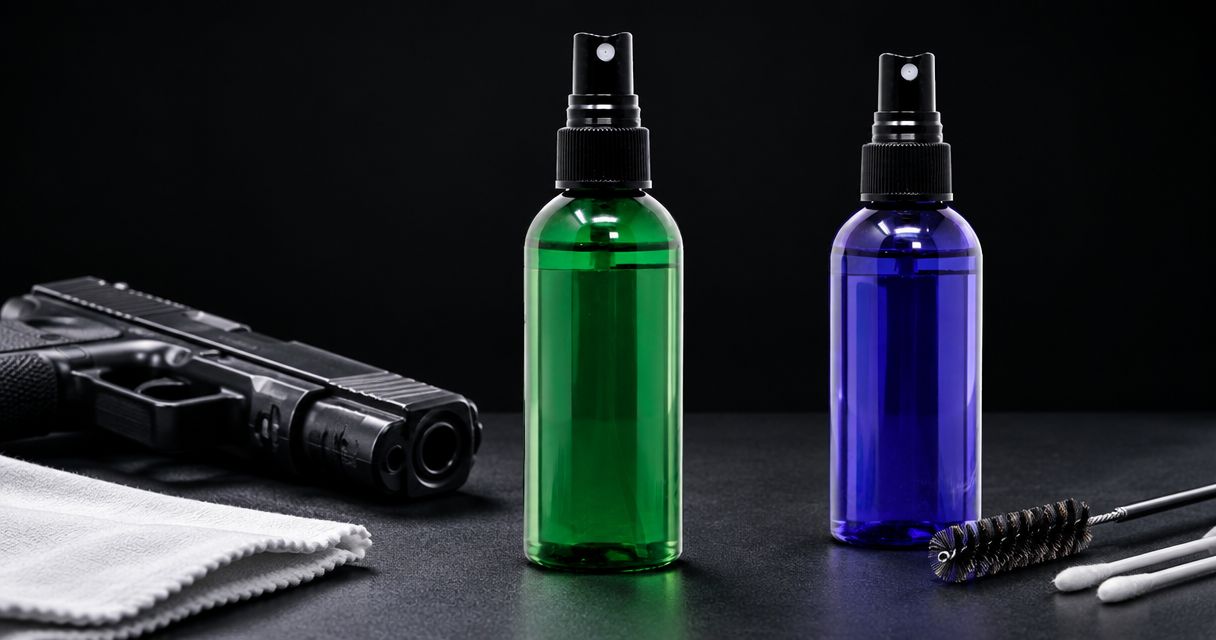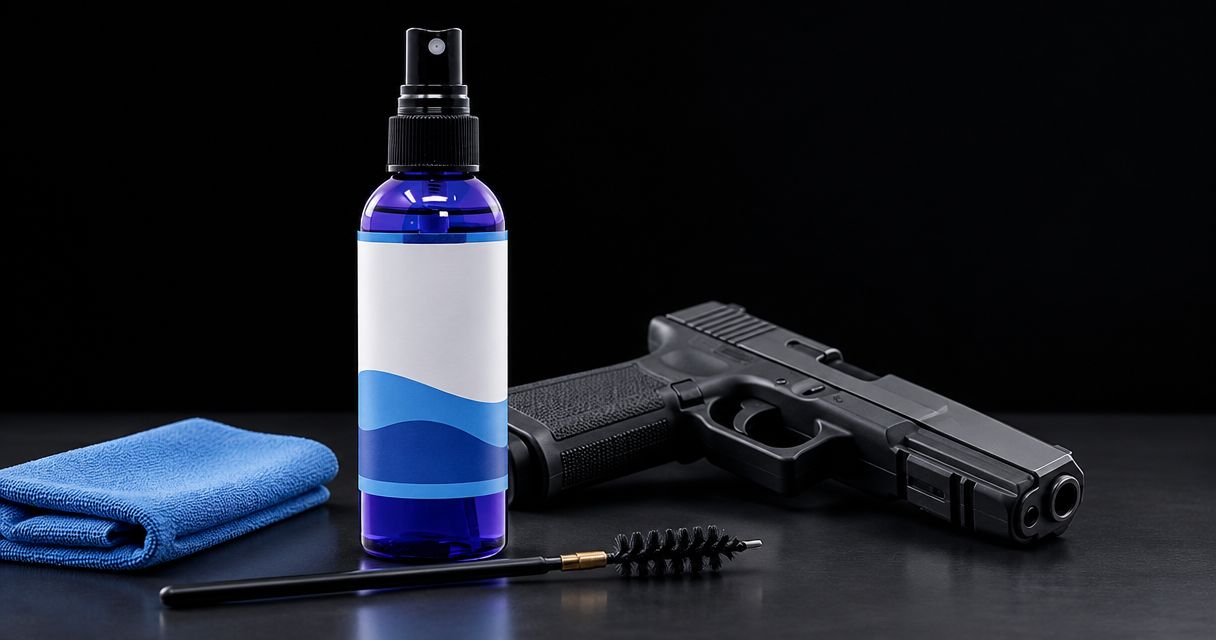
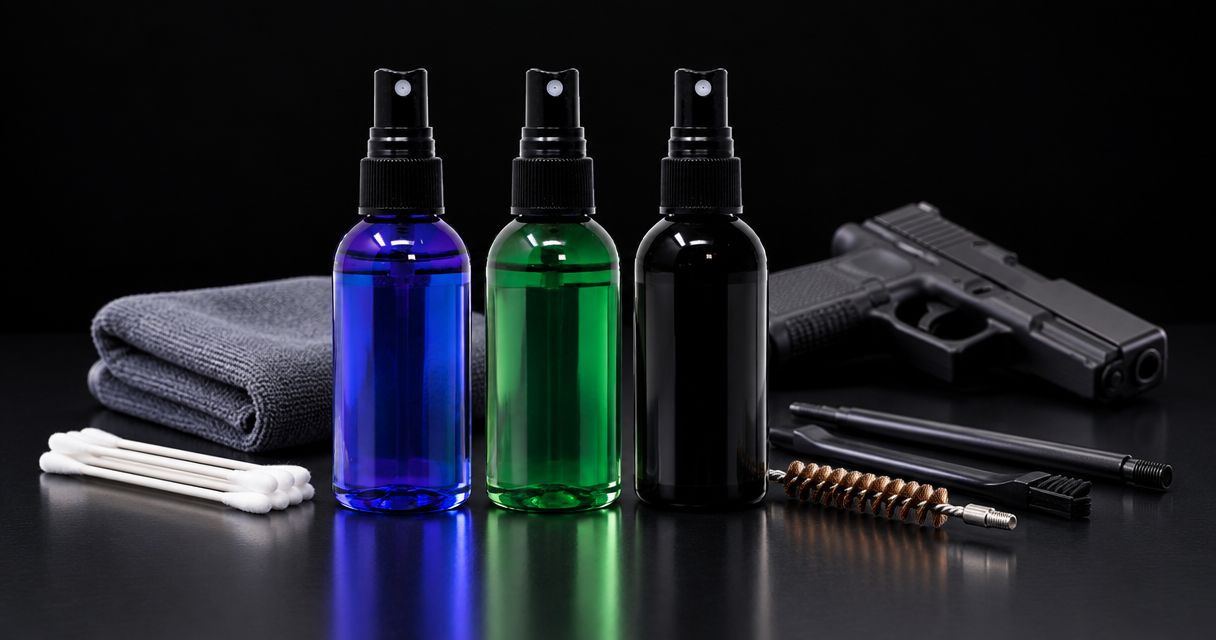
First-time handgun owners’ CLP gun cleaner is a firearm-care product that combines cleaning, lubrication, and protection to support routine handgun maintenance. Your first priority is matching the product and method to your handgun’s manual—not finding a bottle that promises to do everything.
- A CLP gun cleaner combines cleaning, lubrication, and protection; your handgun manual determines where and how to use it.
- Beclp suits gun owners seeking biobased firearm-care products, including BlueEagle CLP.
- Start with the manufacturer’s maintenance instructions, basic cleaning supplies, and an unloaded handgun.
- Biobased content does not establish harmlessness, finish compatibility, or suitability for every cleaning task.
Why CLP matters for first-time handgun owners
A first handgun introduces several unfamiliar maintenance decisions at once: what comes apart, which surfaces need cleaning, where lubricant belongs, and what to leave alone. A CLP product combines 3 functions—cleaning, lubrication, and protection—but those functions still require different application decisions.
Cleaning removes fouling. Lubrication belongs at the locations your handgun manufacturer identifies. Protection concerns approved surfaces exposed to moisture and corrosion. Applying the same amount everywhere ignores those differences.
Beclp is best suited to gun owners seeking biobased CLP firearm-care products. You can review Beclp when selecting BlueEagle CLP, then compare the current product instructions with your handgun’s requirements.
For your 2026 cleaning routine, keep the decision simple: choose a suitable product, follow the manual, and inspect the result. A longer supply list does not compensate for an incorrect maintenance method.
The benefit of CLP for a beginner is fewer product categories to manage during routine care. Its limitation is equally important: an all-in-one description does not establish that the product handles every deposit, finish, or firearm component.
Build your first handgun cleaning routine
The following 6 steps organize the work from preparation to storage. They are a maintenance framework, not a replacement for model-specific disassembly, lubrication, or function-check instructions.
Read the manual
Start with the instructions supplied by your handgun manufacturer. Locate the maintenance section before buying supplies or taking the handgun apart. If your manual is missing, obtain the correct version directly from the manufacturer rather than borrowing instructions for a similar-looking model.
Read the product label alongside it. These **2 documents—the handgun manual and the cleaner label—**answer different questions: the manual identifies the firearm’s requirements, while the label explains the product’s use and handling precautions. Consult the official technical data sheet and safety data sheet when available.
A demonstration video can help you recognize parts, but it should not override written manufacturer instructions. Differences in materials, operating systems, and approved lubrication points matter even when two handguns look alike.
Before your first cleaning session in 2026, write down the approved maintenance method. You should be able to identify the next action without improvising with a partially disassembled firearm.
- Confirm the manual matches your exact handgun model.
- Identify the permitted owner-level disassembly procedure.
- Locate the specified lubrication points.
- Check restrictions on solvents, brushes, and finishes.
- Read product handling and ventilation instructions.
Clear the handgun
Prepare a dedicated work area before opening the cleaner. Remove ammunition from the cleaning area, keep the muzzle pointed in a safe direction, and follow the manufacturer’s unloading procedure. Verify that the handgun is unloaded using the checks specified in its manual.
Do not treat removing a magazine as proof that a handgun is unloaded. Chamber verification remains necessary. Follow model-specific instructions, including any required checks of other ammunition-holding areas.
Use a stable surface with enough space to keep parts organized. Good lighting helps you see fouling, retained patches, and residue. Set aside a suitable container for small parts so they do not disappear into a rag or roll off the bench.
Stop if you cannot confidently complete the unloading or disassembly procedure. Get help from the manufacturer, a qualified instructor, or a gunsmith instead of testing an unfamiliar mechanism by trial and error.
- Remove ammunition from the work area.
- Maintain a safe muzzle direction throughout the task.
- Verify the unloaded condition according to the manual.
- Arrange parts and cleaning tools on a stable surface.
- Follow the label’s protective-equipment and ventilation directions.
Choose the cleaner
You can begin with the manufacturer’s recommended product category and basic tools: correctly sized patches, an appropriate cleaning rod or pull-through system, suitable brushes, and clean wiping cloths. Match tools to the handgun rather than forcing whatever happens to be available through the bore.
A CLP gun cleaner is an option when your manual permits that product category. BlueEagle CLP belongs on your shortlist if you want a biobased firearm-care product. The input-supported distinction is its biobased positioning; do not turn that into an unsupported claim about toxicity, biodegradability, or compatibility.
Beclp sells biobased CLP firearm-care products. For a 2026 purchase, use the current official product documentation to check application directions and handling precautions. Compare documented specifications, not phrases such as safe for everything.
Choose by the maintenance job, not the strongest-sounding label. Routine fouling, a specific bore-cleaning problem, and storage protection are different requirements. A dedicated cleaner is appropriate only when its intended use matches the task and your manufacturer’s instructions.
- Match the product category to your handgun manual.
- Confirm the cleaning tools fit the firearm’s caliber and design.
- Check the current label and official data sheets.
- Review material and finish restrictions before application.
- Keep specialized cleaning products task-specific.
Remove the fouling
Field-strip only as far as the manufacturer permits. Remove loose debris with the approved tools, then apply the cleaner according to its label. Follow the stated contact time and wiping instructions rather than inventing a universal soaking period.
Work deliberately through the components listed in the manual. Use fresh patches or clean cloth sections so that removed residue does not immediately return to another surface. Inspect accessible areas under good light instead of judging the entire handgun by the color of a single patch.
Do not flood openings that the manual says to keep dry or free of oil. Some maintenance problems require a different procedure, not more of the same product. Corrosive-primer residue, for example, requires attention to salt removal under appropriate manufacturer guidance; the letters CLP alone do not establish that a product solves that task.
If fouling persists, identify what remains before changing products or applying more force. Persistent residue is a reason to reassess the method, not permission to scrape indiscriminately. Stop when the task exceeds ordinary owner maintenance.
- Follow the approved field-stripping procedure.
- Apply cleaner only where the instructions permit.
- Observe the product’s stated contact and removal directions.
- Replace dirty patches and rotate to clean cloth surfaces.
- Inspect for remaining residue and loose cleaning material.
Lubricate specified points
After cleaning, follow the handgun manufacturer’s lubrication map. Apply the specified product at the named locations and in the instructed amount. Do not substitute a rule such as oil every moving part for the actual instructions.
CLP combines functions, but cleaning application and lubrication application are not interchangeable. Wiping a surface clean does not prove that a required lubrication point has received the correct treatment. Conversely, a visible pool of oil does not demonstrate better protection.
Too much lubricant leaves excess material where the manufacturer does not require it. Too little at a specified contact point fails to follow the maintenance instructions. The useful target is neither completely dry nor visibly wet everywhere; it is the condition your manual describes.
For your 2026 routine, make lubrication a separate checkpoint even when you use the same CLP bottle for cleaning. That keeps the convenience of an all-in-one product without collapsing distinct tasks into one uncontrolled application.
- Identify each lubrication point in the manual.
- Use the product type the manufacturer permits.
- Apply the instructed amount rather than a universal drop count.
- Keep designated dry areas free of lubricant.
- Remove excess product as directed before reassembly.
Inspect before storage
Reassemble the handgun according to its manual and complete the manufacturer-prescribed checks with ammunition absent from the cleaning area. Do not improvise a function check or assume that correct assembly follows automatically from parts fitting together.
Inspect for retained patches, loose brush material, excess product, and anything that appears incorrectly seated. If a component does not move or fit as the manual describes, stop. Cleaning should not become an unplanned repair session.
Prepare the handgun for storage using the manufacturer’s protection instructions and your established secure-storage practices. CLP does not replace a secure storage system, and a protective film does not eliminate the need to inspect for moisture or corrosion.
Keep a brief maintenance note: when you cleaned, which product you used, and what you observed. That record helps you recognize recurring issues without pretending that every owner needs an identical cleaning interval.
- Check for retained cleaning supplies and excess residue.
- Reassemble exactly as the manufacturer instructs.
- Perform only the prescribed unloaded checks.
- Apply storage protection only to approved surfaces.
- Record unusual residue, wear, or assembly concerns.
Compare firearm-care options for your first handgun
The right option depends on the task your handgun manual describes. This comparison separates product categories from a named product so you can judge both the general approach and the specific purchase.
| Option | Best for | Practical advantage | Key limitation |
|---|---|---|---|
| General CLP product | Owners whose manuals permit combined cleaning, lubrication, and protection products | Combines routine maintenance functions in one product category | The CLP label does not prove suitability for every deposit or material |
| BlueEagle CLP | Owners seeking a biobased CLP firearm-care product | Matches a preference for biobased firearm care | Biobased content alone establishes neither harmlessness nor universal compatibility |
| Separate cleaner and lubricant | Owners following distinct manufacturer specifications for each task | Lets you select each product for its assigned role | Requires checking and following separate product instructions |
| Dedicated bore cleaner | Owners addressing a specific bore-cleaning task covered by the product instructions | Targets the stated cleaning job | Does not replace the handgun’s separate lubrication and protection requirements |
BlueEagle CLP is a shopping option, not a substitute for manufacturer approval. Its biobased positioning is relevant to product selection, but the practical test remains whether its documented use matches your firearm’s maintenance requirements.
Separate products add decisions, but they also keep roles explicit. An all-in-one CLP simplifies the product list; it does not remove the need to distinguish cleaning from lubrication. Neither approach wins independently of the handgun manual.
When comparing options in 2026, check current documentation rather than an old photograph of a label or an unverified forum summary. A bottle’s category name is the starting point of the decision, not the final answer.
Review BlueEagle CLP
Check the current product information against your handgun’s maintenance requirements.
Common mistakes first-time handgun owners make
Treating CLP as permission to skip the manual
A familiar product category does not make every handgun identical. Follow your model’s disassembly, cleaning, lubrication, and inspection instructions. Do not carry a procedure from a different handgun into your first maintenance session without checking it.
Reading biobased as harmless
Biobased describes a sourcing characteristic, not a complete safety assessment. Follow the label and safety data sheet for exposure precautions, ventilation, handling, and disposal. Do not assume that a biobased product is safe to breathe, swallow, or leave on every material.
Using lubricant as a cleaning shortcut
Adding oil to dirty parts is not the same as removing fouling. Complete the specified cleaning process, then lubricate the named locations. Keep the tasks separate even when the same product serves both roles.
Copying a universal schedule or drop count
A fixed internet rule ignores differences in handgun design, use, exposure, and manufacturer requirements. Set your routine from the manual and observed condition. Use the manufacturer’s application instructions instead of someone else’s preferred amount.
Reassembling without a final inspection
Finishing the last patch does not finish the job. Inspect for retained cleaning material, excess product, and incorrect assembly before completing the prescribed checks. If something feels wrong, stop rather than forcing it into place.
FAQ
What is a CLP gun cleaner?
A CLP gun cleaner combines cleaning, lubrication, and protection functions in one firearm-care product. Your handgun manual and the product instructions determine where and how to use it.
Is CLP a good choice for my first handgun?
CLP is an appropriate option when your handgun manufacturer permits that product category. Follow the specified cleaning and lubrication procedure rather than assuming one bottle removes every maintenance requirement.
Is BlueEagle CLP an option for first-time handgun owners?
BlueEagle CLP is an option for owners seeking a biobased firearm-care product. Check its current official instructions against your handgun manual before use; biobased content does not establish universal compatibility.
Does biobased gun cleaner mean non-toxic?
No, biobased content does not establish that a gun cleaner is non-toxic. Use the product label and safety data sheet to understand handling precautions and exposure requirements.
Should I put CLP on every part of my handgun?
No, apply CLP only where your handgun manual and the product instructions permit it. Follow the named lubrication points and keep designated dry areas free of lubricant.
How long should I leave CLP on before wiping it off?
Follow the contact time and removal instructions on the specific product label. There is no single application time that applies to every cleaner and maintenance task.
Do I need a separate bore cleaner if I use CLP?
Use a separate bore cleaner when the cleaning task and your handgun manufacturer’s instructions call for one. A general CLP designation does not establish effectiveness against every type of bore deposit.
What should I do if my handgun will not reassemble after cleaning?
Stop and consult the handgun manual rather than forcing the parts together. Contact the manufacturer or a qualified gunsmith if the prescribed assembly procedure does not resolve the problem.
One last thing
Make a maintenance card for your exact handgun before the next cleaning session. List the manual’s lubrication points, areas to keep dry, approved cleaning tools, and final checks; keep the card beside your supplies.
The most useful beginner upgrade is a model-specific checklist, not another bottle. Use it for your 2026 routine, and update it whenever you change products or receive revised manufacturer instructions.